
Customs List Challenges Affecting Vehicle Importation In Nigeria
The Nigeria Customs Service (NCS) has listed challenges bedevilling the service relating to vehicle importation in the country.
The NCS listed smuggling and under-declaration, valuation and classification, inadequate infrastructure, corruption and compliance issues, policy and regulatory framework, and environmental and safety standards as parts of the challenges affecting the Customs in Nigeria.
Comptroller General, Customs, Bashir Adewale Adeniyi, stated this at the event organised by the Nigeria Auto Journalists Association in conjunction with the National Automotive Design and Development Council (NADDC) in Lagos.
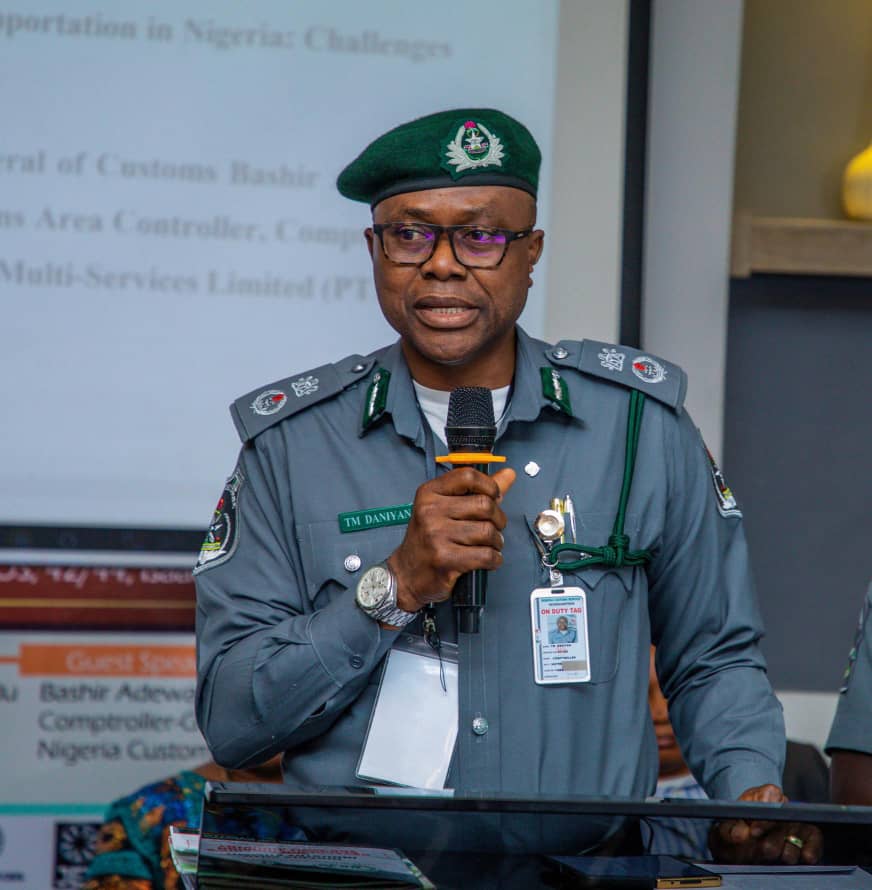
Adeniyi who was represented by Customs Area Controller, Comptroller, Port and Terminals Multi-Services Limited (PTML), TM Daniyan, said Vehicle importation in Nigeria has seen significant growth over the years, driven by increasing demand for both new and used vehicles.
He said the automotive industry plays a vital role in the Nigerian economy, contributing to transportation, job creation, and economic activities across various sectors.
However, he said this growth comes with several challenges, particularly for the Nigeria Customs Service (NCS), which is responsible for regulating and facilitating the importation process.
According to him, smuggling and under-declaration of vehicles are rampant issues that undermine revenue collection and create unfair competition for legitimate importers.

He said these illegal activities lead to significant revenue losses for the government and distort market dynamics.
Besides, he said the NCS has intensified efforts to curb smuggling through increased surveillance, intelligence gathering, and collaboration with other security agencies.
He said accurate valuation and classification of imported vehicles pose a significant challenge due to the wide variety of makes, models, and conditions.
The impact, he said, is that discrepancies in valuation can result in disputes between importers and customs officials, delaying the clearance process.
However, he said the NCS has adopted the valuation database system to standardize the valuation process and ensure fairness and transparency.
He also listed the infrastructure issue at many ports and border posts as inadequate to handle the volume of vehicle imports efficiently.
He said congestion, delays, and increased operational costs are common issues faced by both the NCS and importers.
He said the NCS is working with port authorities and other stakeholders to improve infrastructure and streamline the importation process.
According to him the issue of corruption within the system can lead to evasion of duties and non-compliance with regulations. This, he said, compromises the integrity of the customs process and leads to revenue leakage.
However, he said the NCS has implemented strict anti-corruption measures, including the use of technology to reduce human interaction and enhance accountability.
Daniyan noted that frequent changes in government policies and regulations can create uncertainty and confusion among importers, which can lead to compliance challenges and disrupt the flow of vehicle imports.
Yet, he said the NCS advocated for a stable and predictable policy environment to facilitate smooth operations and ensure compliance.
He said the issue of ensuring that imported vehicles meet environmental and safety standards is crucial but challenging.
Hence, he said non-compliant vehicles can pose health and safety risks to the public and contribute to environmental degradation.
He stated that the NCS collaborates with the National Automotive Design and Development Council (NADDC) and other relevant agencies to enforce compliance with standards.
According to him, while vehicle importation in Nigeria presents several challenges for the NCS, it also offers opportunities for growth and development in the automotive industry.
“By addressing these challenges through collaboration, infrastructure improvement, policy stability, technological advancement, and a strong focus on compliance and anti-corruption measures, we can create a more efficient and transparent importation process that benefits all stakeholders,” he said.
Copyright ©The Daily Bells.
All rights reserved. This material, and other digital content on this website, may not be reproduced, published, broadcast, rewritten or redistributed in whole or in part without prior express written permission from The DAILY BELLS.
HELLO! Do you have any NEWS you will like to share with The Daily Bells?
Contact us today for your Press Releases, Opinions, Others.
SMS: +2348060176677, WhatsApp: +2348025237926, Email: mydailybells@gmail.com


